Print | Login
graphs/graph_sv_l.gif
anglais seulement
School of Life Sciences  >  ISREC  >  ISREC - Lab of De...
Patte souris homage_2.jpg

Introduction

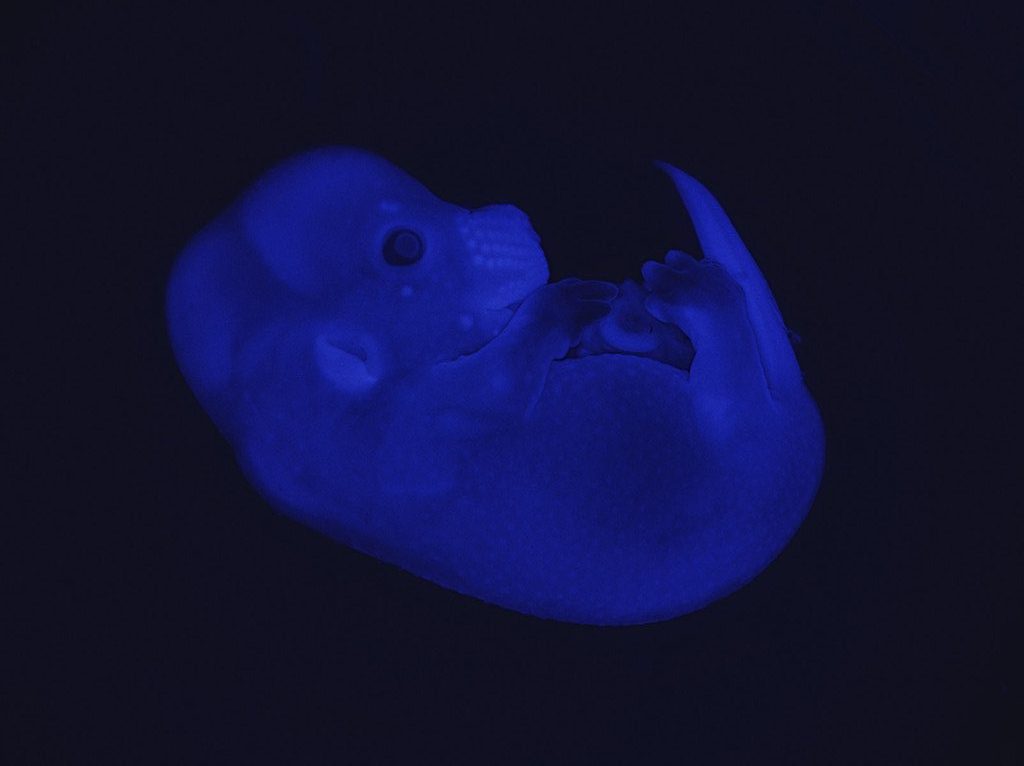
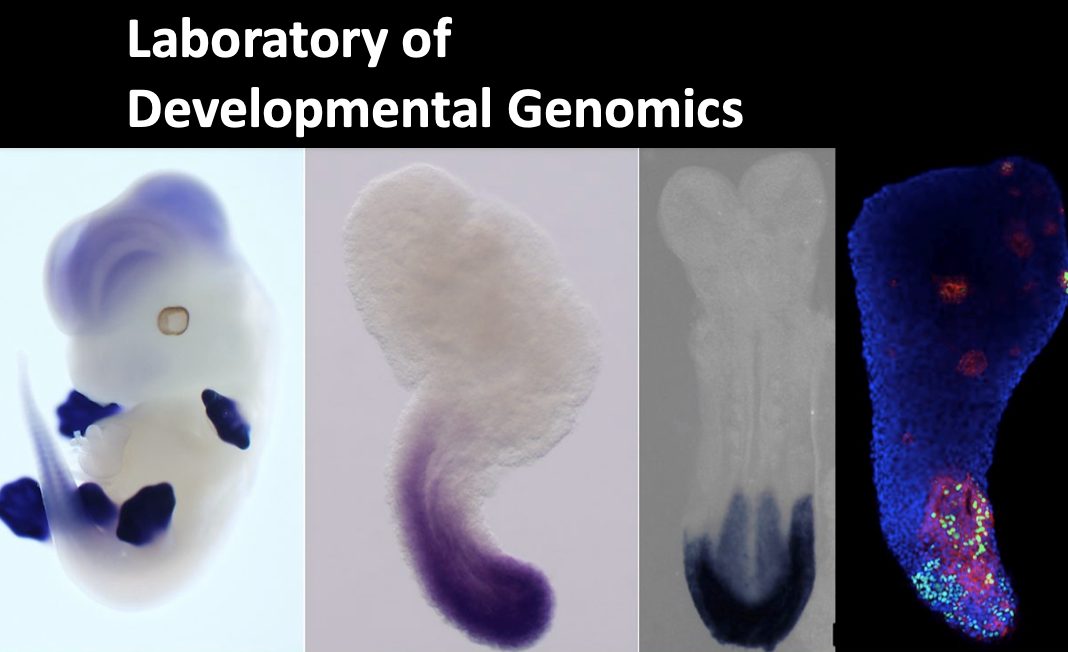
Our laboratory has started operating during 2007. Its major aim is to study principles of mammalian embryological development by using the recent tools of functional genomics. A special focus is given to those similarities and differences that exist between the embryological development of vertebrates (to whom mammals belong) and those of other animals (invertebrates), from whom vertebrates derive.

To achieve this task, we use the developing mouse embryo in vivo as an experimental system, and try and apply the methodology developed following the sequencing of complex genomes.

Our major, though not exclusive, target is the understanding of the regulation of a critical family of transcription factors during the construction of the animal body plan, referred to as architect genes (the Hox gene family). These genes have a special interest in the study of both our ontogenesis (our development as individuals) and our phylogeny (our origin as a group of individuals) and the detailed understanding of their regulations and functions will be an important step in our understanding of our own histories.

News

05.03.2010
Des gènes voyageurs
Capables de voyager et de se poser n'importe où sur un génome, des gènes "sauteurs" seraient à l'origine de la grande diversité d'espèces dans une même famille d'animaux. C'est ce qu'a découvert l'équipe de Denis Duboule, généticien, professeur à l'EPFL et à l'Université de Genève, qui a notamment travaillé sur des espèces de reptiles. Ces gènes "sont considérés comme de véritables moteurs de l'évolution", commente le scientifique. A lire dans la "Tribune de Genève" et "Le Temps".

Le Temps, 03.03.2010 Pourquoi les serpents sont si longs
TdG, 04.03.2010 Des Genevois localisent des "gènes sauteurs"


09.06.2009
The Hox Complex - an interview with Denis Duboule
Published in the International Journal of Development Biology
Interviewed by Michael K. Richardson, Institute of Biology, Leiden University, The Netherlands

06.02.2009
La théorie de Darwin, toujours d'actualité
A l'approche du bicentenaire de la naissance de Charles Darwin, la "Tribune de Genève" consacre un grand dossier à la théorie de l'évolution élaborée par le savant il y a de cela 150 ans dans son ouvrage "L'origine des espèces". D'après le journal, la thèse du naturaliste anglais reste aujourd'hui la plus adaptée pour expliquer le monde des vivants. Pour Denis Duboule, généticien à l'EPFL et à l'UNIGE, le génie de Darwin est d'avoir proposé un mécanisme qui explique le déroulement de l'évolution.

01.02.2008
The Thumb's the Thing

CONTACT

Head of the Laboratory

 Prof. Denis Duboule

 Office : SV 2843 


Administration

 Caroline Guinchard

 Office : AI 3151 


Address

 EPFL-SV-ISREC-UPDUB

 Station 19

 CH-1015 Lausanne

 Ph:+41(0)21 693 17 94

 Fx:+41(0)21 693 95 38


The Team

 Names and pictures


SEARCH TOOL
 this site
 a person
 a place
  Web EPFL

  OK